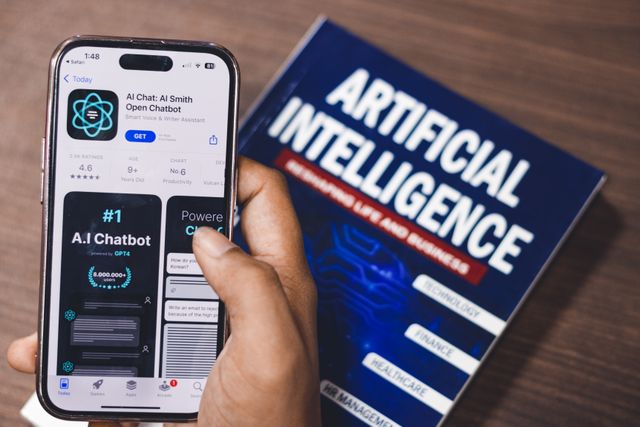
Should Generative AI Be Banned in Schools or Integrated into Education?
🎙️ Debate Speech
Introduction
Good morning respected judges, teachers, and my dear friends.
Today, I stand before you to speak on the topic: “Should Generative AI tools like ChatGPT be banned in school education, or integrated into the curriculum?”
Generative AI has rapidly woven itself into the fabric of our daily lives. Within seconds, a student can prompt an AI model to break down a complex mathematical concept, refine sentence structure, brainstorm creative project ideas, or summarize dense academic texts. However, this immense capability brings a serious dilemma: when technology makes answers effortless, does it risk making learning obsolete?
The Argument for a Ban: Protecting Core Learning & Cognitive Growth
Those who advocate for an outright ban in schools raise valid and urgent concerns:
- Academic Dishonesty and Plagiarism: When an AI can draft an entire essay or lab report in seconds, students face the temptation to submit work they never wrote. In this transaction, the student may secure high marks, but genuine comprehension and mastery are entirely lost.
- Hallucinations and Misinformation: AI models frequently generate convincing yet completely fabricated facts. Students who lack the subject maturity to verify sources risk accepting errors as truth.
- Cognitive Atrophy: Deep learning requires productive struggle—grappling with an idea, organizing thoughts, and revising errors. Over-relying on algorithmic answers weakens independent reasoning, critical thinking, original research habits, and foundational writing skills.
The Argument for Integration: Fostering Digital Literacy
While the risks are undeniable, imposing a total ban is neither practical nor productive. AI is an enduring workplace and cultural reality; ignoring it inside the classroom leaves students unprepared for the world outside it.
- AI as an Adaptive Learning Assistant: Rather than serving as an essay mill, AI can act as an on-demand personal tutor. A student struggling with a difficult physics law can ask the model for alternative analogies, and then cross-reference those explanations against their standard textbooks.
- Formative Feedback and Writing Revision: In language learning, students can write their own drafts first, then utilize AI as an interactive editor to spot grammatical inconsistencies, suggest richer vocabulary, and explain structural flaws.
- Teaching Ethical Literacy: Classrooms provide the ideal, controlled environment to teach source evaluation, algorithmic bias, data privacy, intellectual property, and the boundary between research assistance and cheating.
My Verdict
In my view, Generative AI should not be banned from school education; it must be systematically and responsibly integrated with clear guardrails.
Students must be taught that AI is a tool for leverage, not an intellectual shortcut. It should be harnessed to interrogate concepts, practice skills, and elevate creativity—never to bypass the hard work of thinking.
Schools and educators can adapt by redesigning evaluations: emphasizing classroom debates, oral defenses, collaborative problem-solving, and in-class handwritten synthesis.
To conclude: Banning technology may temporarily keep it outside the school gate, but it fails to prepare students for the digital frontier. The goal of modern education is not to shield students from powerful tools, but to teach them how to wield those tools with integrity, discernment, and care.
AI should never replace the human mind; it should challenge us to use our minds more deeply.
Thank you.
🏷️ Tags
Generative AI, ChatGPT, Artificial Intelligence, Education, Students, School Life, Digital Learning, EdTech, Critical Thinking