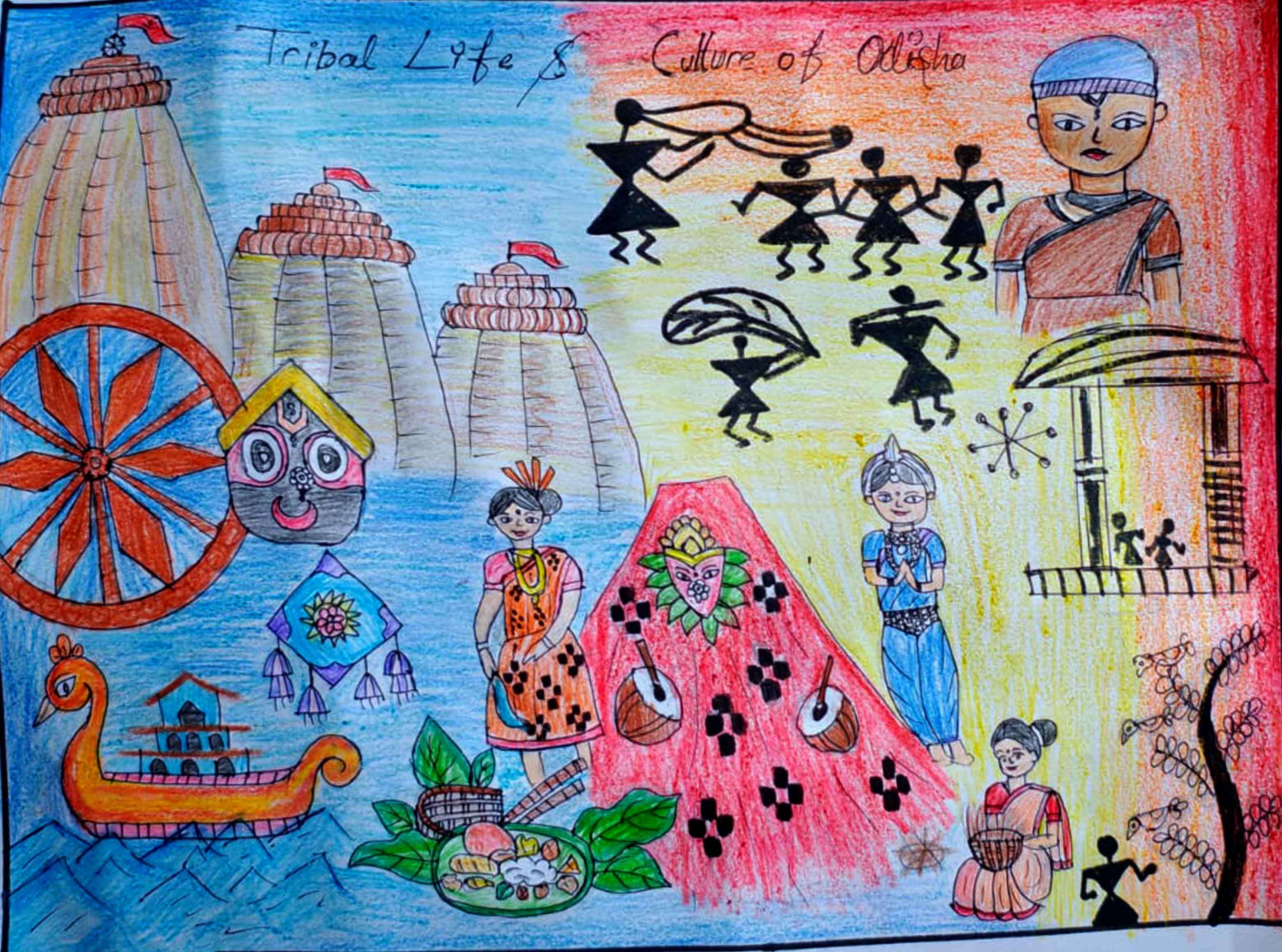
Tribal Life & Culture of Odisha — Step-by-Step Art Process
📌 Artwork Overview
- Title: Tribal Life & Culture of Odisha
- Category: Cultural Composition / Mixed Media Collage Art
- Medium: Oil pastels, wax crayons, color pencils, and fine-tip black marker on drawing paper
- Key Themes: Classical heritage, indigenous tribal traditions, maritime history (Boita Bandana), and temple architecture of Odisha
🎨 Materials Required
- A3/A4 Drawing Cartridge Paper (180–200 GSM)
- 2B/HB Graphite Pencil & Kneaded Eraser
- 0.5mm / 0.8mm Waterproof Black Fineliner / Calligraphy Marker
- Artist-grade Oil Pastels & Colored Pencils
- Blending stump / cotton swab / tissue paper
🖌️ Step-by-Step Drawing & Coloring Process
Step 1: Conceptual Layout & Sectioning
- Zonal Partitioning: Map out the sheet into balanced narrative zones:
- Left Section (Spiritual & Maritime Lore): Space for the Jagannath Temple spire (rekha deula), the Konark Chakra (chariot wheel), the face of Lord Jagannath, and a decorative peacock boat (Mayurpankhi Boita) over ocean waves.
- Center & Upper Canvas (Tribal Celebrations): Space for Saura/Warli-inspired rhythmic community dancers, a traditional tribal goddess/shrine altar, and a sacred food offering plate (Pakhala / Mahaprasad on banana leaf).
- Right Section (Classical Arts & Village Life): Placement for an Odissi dancer in greeting posture (Namaste), an indigenous woman portrait, rural cottage architecture, and everyday village activities.
Step 2: Pencil Construction (Rough Sketch)
- Use a light 2B pencil with minimal pressure so marks can be easily erased.
- Draft the vertical spires of the temples with horizontal ribbing (bhumi amalakas).
- Draw a circle with radial spokes for the Sun Temple wheel.
- Block the human figures using stick-figure guidelines to establish proportions and dynamic poses (e.g., the Odissi dancer’s headgear, tribal dance hand-hold loop, and kneeling village artisan).
Step 3: Graphic Inking & Tribal Silhouettes
- Outline all primary figures, architecture, and floral motifs using a black fineliner pen.
- Block in the tribal figures directly using solid black ink/marker to replicate authentic indigenous rock/wall art style:
- Dancers holding hands in a synchronized chain.
- Hunters and gatherers holding traditional tools.
- Tribal percussion instruments (Dholak / Madal).
Step 4: Background Atmospheric Tones
- Sky & Sea (Left): Apply a light sky-blue pastel wash behind the temple spires, gradually fading toward the center. Layer deep cerulean and cobalt blue at the bottom with swirling wave strokes for the ocean.
- Warm Radiance (Top-Right): Blend fiery red and golden orange pastels along the top-right corner to depict the warmth of rural hearths and morning sun.
- Midground Glow: Keep the center light yellow/cream to illuminate the festive dance circle.
Step 5: Rendering Subjects & Textures
- Architecture & Icons:
- Shade the stone temple towers using alternating stripes of light ochre, beige, and warm grey.
- Color the Konark wheel using vivid vermillion red and cobalt blue accents.
- Detail the face of Lord Jagannath with signature round eyes, bright yellow face outline, and red smile.
- Costumes & Textiles:
- Fill the tribal clothing with earthen terracotta, yellow, and dot patterns.
- Shade the Odissi classical dancer’s attire in electric blue and white jewelry (tahiya / silver filigree motifs).
- Render the sacred triangular shrine in vermillion red with repetitive black leaf motifs.
- Nature & Foreground Elements:
- Color the peacock boat with warm yellow, orange hull, and bright green foliage around the food spread.
Step 6: Detailing, Contrast & Lettering
- Re-trace pencil lines over areas softened by pastel dust using a firm black marker.
- Add delicate white pastel or gel pen dots along borders for folk fabric detailing.
- Neatly hand-letter the title “Tribal Life & Culture of Odisha” across the upper sky portion.
🏷️ Key Elements Highlighted
- Odissi Classical Dance: Expressive tribute to Odisha’s classical performing tradition.
- Saura/Tribal Art: Iconic geometric folk figures honoring the rich indigenous communities of Mayurbhanj, Koraput, and beyond.
- Boita Bandana / Bali Yatra: Tribute to ancient Kalinga’s maritime sea-trade expeditions.
- Puri & Konark Monuments: Timeless symbols of architectural grandeur and spiritual identity.